The hydraulic system plays a pivotal role in the functionality of a boom lift, a crucial piece of equipment for various industries such as construction, maintenance, and warehousing. As a leading boom lift supplier, I am excited to delve into the intricacies of how the hydraulic system of a boom lift works.
Hydraulic System Basics
At the heart of any hydraulic system is the principle of Pascal's Law. This law states that when pressure is applied to a confined fluid, the pressure change occurs throughout the entire fluid. In the context of a boom lift, the fluid is typically a type of hydraulic oil.
A hydraulic system consists of several key components: a hydraulic pump, hydraulic cylinders, control valves, and a reservoir. The hydraulic pump is responsible for generating the pressure needed to move the fluid through the system. It takes in hydraulic oil from the reservoir and forces it into the hydraulic cylinders.
Hydraulic Pump
The hydraulic pump in a boom lift is usually powered by the engine of the lift or an electric motor. There are different types of hydraulic pumps, including gear pumps, vane pumps, and piston pumps. Gear pumps are commonly used in smaller boom lifts due to their simplicity and cost - effectiveness. They work by meshing two gears together, which creates chambers that trap the hydraulic oil and move it from the inlet to the outlet of the pump.
Vane pumps, on the other hand, use vanes that slide in and out of a rotor to create the pumping action. They are known for their smooth operation and relatively high efficiency. Piston pumps are the most powerful and are often used in larger boom lifts. They use reciprocating pistons to generate high pressure, allowing for the movement of heavy loads.
Hydraulic Cylinders
The hydraulic cylinders are what give the boom lift its ability to move. There are typically multiple cylinders in a boom lift, each responsible for a different movement. For example, there are cylinders to raise and lower the boom, extend and retract it, and sometimes to tilt the platform.
A hydraulic cylinder consists of a cylinder barrel, a piston, and a piston rod. When the hydraulic oil is pumped into one side of the cylinder, it pushes the piston, which in turn moves the piston rod. This movement is then transferred to the boom or the platform, causing the desired motion.

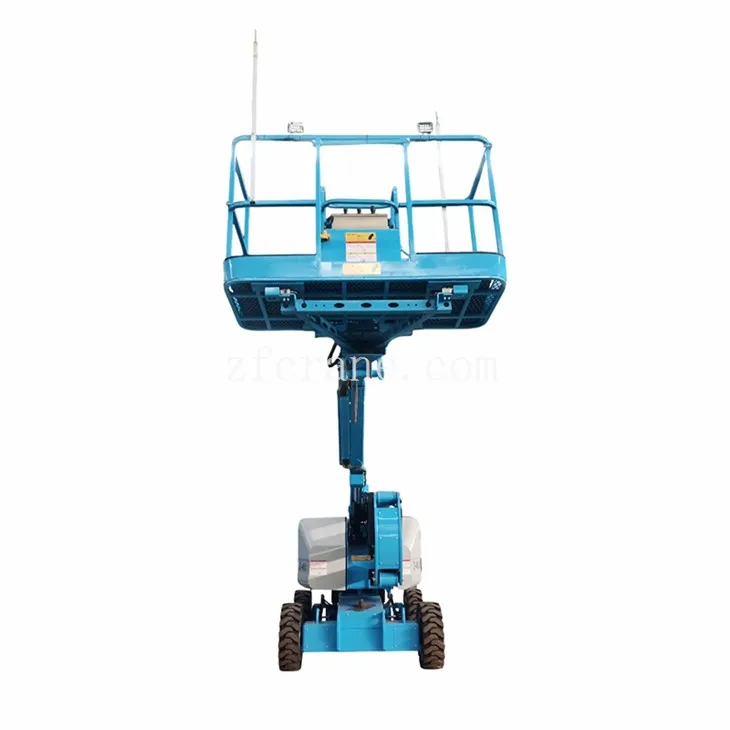
For instance, when raising the boom, the hydraulic pump pumps oil into the base of the raising cylinder. The pressure of the oil pushes the piston upwards, extending the cylinder and raising the boom. When lowering the boom, the control valve redirects the oil flow, allowing the oil to return to the reservoir and the cylinder to retract.
Control Valves
Control valves are essential for regulating the flow of hydraulic oil in the system. They determine the direction, pressure, and rate of flow of the oil. There are several types of control valves used in boom lifts, including directional control valves, pressure control valves, and flow control valves.
Directional control valves are used to change the direction of the oil flow. They allow the operator to control whether the oil goes to the raising cylinder, the extending cylinder, or any other cylinder in the system. Pressure control valves, as the name suggests, regulate the pressure of the oil. They prevent the pressure from getting too high, which could damage the system. Flow control valves control the rate at which the oil flows, which in turn affects the speed of the boom lift's movements.
Reservoir
The reservoir is where the hydraulic oil is stored. It also serves as a place for the oil to cool down and for any contaminants to settle out. The reservoir is typically equipped with a filter to remove any dirt or debris from the oil before it is pumped back into the system.
Working in Harmony
All these components work together in a coordinated manner to make the boom lift function properly. The operator uses the controls in the platform or at the base of the lift to send signals to the control valves. These signals tell the valves which cylinders need to be activated and how much oil should be sent to them.
For example, if the operator wants to extend the boom, they will move a lever or press a button. This sends a signal to the directional control valve, which then redirects the oil flow from the pump to the extending cylinder. The hydraulic pump then pumps oil into the cylinder, causing it to extend and the boom to move outwards.
Different Types of Boom Lifts and Their Hydraulic Systems
As a boom lift supplier, we offer various types of boom lifts, each with its own unique hydraulic system requirements.
The Self Propelled Electric Articulating Boom Lift is designed for indoor use and in areas where noise and emissions are a concern. Its hydraulic system is powered by an electric motor, which offers smooth and precise control. The articulating boom design allows for greater flexibility in reaching different heights and angles, and the hydraulic cylinders are carefully calibrated to ensure accurate movements.
The Self Propelled Articulating Boom Lift is suitable for a wider range of applications, both indoor and outdoor. It has a more robust hydraulic system that can handle the rigors of different terrains and heavier loads. The hydraulic cylinders are larger and more powerful to support the movement of the articulating boom.
The Self Propelled Telescopic Boom Lift is known for its ability to reach great heights quickly. Its hydraulic system is designed to provide rapid extension and retraction of the telescopic boom. The cylinders are specifically engineered to handle the high speed and force required for these movements.
Maintenance of the Hydraulic System
Proper maintenance of the hydraulic system is crucial for the safe and efficient operation of the boom lift. Regularly checking the hydraulic oil level and quality is essential. The oil should be changed at the recommended intervals to prevent contamination and ensure proper lubrication of the system components.
Inspecting the hydraulic hoses for any signs of wear, cracks, or leaks is also important. A small leak in a hydraulic hose can lead to a loss of pressure and affect the performance of the boom lift. The control valves and pumps should be serviced regularly to ensure they are functioning correctly.
Conclusion
In conclusion, the hydraulic system of a boom lift is a complex yet fascinating piece of engineering. It enables the boom lift to perform a wide range of tasks, from reaching high places in a construction site to performing maintenance work in a warehouse.
As a boom lift supplier, we understand the importance of a well - functioning hydraulic system. Our expertise lies not only in providing high - quality boom lifts but also in ensuring that our customers have the knowledge and support they need to maintain these systems.
If you are in the market for a boom lift or need more information about our products and services, we encourage you to contact us for a detailed discussion. Our team of experts is ready to assist you in finding the perfect boom lift solution for your specific needs.
References
- Fluid Power Handbook, edited by the International Fluid Power Society.
- Hydraulic Systems Design and Maintenance Guide, published by a leading industry association.