

A pillar jib crane is a versatile and essential piece of equipment in various industrial settings, offering a practical solution for lifting and moving heavy loads within a limited area. As a pillar jib crane supplier, I am often asked about the different parts that make up these cranes. Understanding the components of a pillar jib crane is crucial for proper operation, maintenance, and even for choosing the right crane for your specific needs. In this blog post, I will delve into the key parts of a pillar jib crane and explain their functions.
Pillar
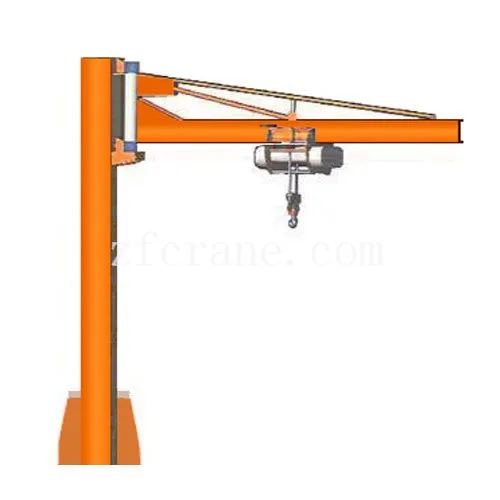
The pillar is the foundation of a pillar jib crane. It is typically a vertical column that is firmly fixed to the floor or a solid base structure. The pillar provides the necessary support and stability for the entire crane. It is designed to withstand the weight of the jib arm, the hoist, and the loads being lifted. The material used for the pillar is usually high - strength steel, which can endure heavy stress and prevent deformation. The height of the pillar can vary depending on the application requirements, such as the clearance needed for the lifted loads and the working space available.
Jib Arm
The jib arm is the horizontal part of the crane that extends from the pillar. It is the component that allows the crane to reach out and cover a certain radius of operation. The jib arm can be either fixed or adjustable in length. Fixed jib arms are simpler in design and are suitable for applications where the lifting range is well - defined and does not need to change frequently. Adjustable jib arms, on the other hand, offer more flexibility as they can be extended or retracted to adapt to different working scenarios.
The jib arm is also designed to rotate around the pillar. This rotation feature enables the crane to move loads in a circular area, increasing its working range. The rotation can be either manual or powered. Manual rotation is suitable for lighter loads and smaller cranes, where the operator can easily turn the jib arm by hand. Powered rotation, usually achieved through an electric or hydraulic motor, is used for larger cranes and heavier loads, providing more efficient and precise movement. For more information on a type of pillar jib crane with slewing function, you can visit Pillar - mounted Slewing Jib Crane.

Hoist
The hoist is the device responsible for lifting and lowering the loads. It is mounted on the jib arm and can move along the length of the arm. There are different types of hoists available for pillar jib cranes, including chain hoists and wire rope hoists.
Chain hoists are commonly used for lighter loads. They work by using a chain to lift the load. The chain is wound around a sprocket, and the lifting action is achieved by turning a hand chain or using an electric motor. Chain hoists are relatively simple in design, easy to operate, and cost - effective.
Wire rope hoists, on the other hand, are more suitable for heavier loads. They use a wire rope that is wound around a drum. The wire rope provides greater strength and durability compared to a chain. Wire rope hoists can also offer higher lifting speeds and more precise control. The hoist is usually equipped with safety features such as overload protection and limit switches to prevent accidents.
Trolley
The trolley is the part that allows the hoist to move along the jib arm. It is a wheeled device that runs on a track installed on the underside of the jib arm. The trolley can be manually or motor - driven. Manual trolleys are operated by the operator pushing or pulling the hoist along the arm. Motor - driven trolleys, which are more common in larger and more automated cranes, use an electric motor to move the hoist smoothly and efficiently.
The trolley plays a crucial role in positioning the hoist accurately over the load. It enables the crane to cover the entire length of the jib arm, increasing the flexibility and usability of the crane. Some trolleys are also designed to have a variable speed control, allowing the operator to adjust the moving speed according to the specific requirements of the lifting operation.
Electrical and Control Systems
Modern pillar jib cranes are often equipped with advanced electrical and control systems. These systems are responsible for powering the crane's motors, controlling the movement of the jib arm, hoist, and trolley, and ensuring the safety of the operation.
The electrical system includes components such as motors, transformers, switches, and wiring. The motors provide the power for the rotation of the jib arm, the movement of the trolley, and the lifting and lowering of the hoist. The transformers are used to convert the electrical voltage to the appropriate level for the different components.
The control system allows the operator to operate the crane safely and efficiently. It can be a simple pendant control, where the operator holds a handheld device with buttons to control the movement of the crane. More advanced cranes may use a remote control system, which provides greater flexibility and convenience, especially in large working areas. The control system also includes safety interlocks and sensors to detect abnormal conditions such as overload, over - travel, and emergency stops.
Safety Devices
Safety is of utmost importance when it comes to operating a pillar jib crane. There are several safety devices installed on these cranes to prevent accidents and protect the operators and the surrounding environment.
Overload protection devices are designed to prevent the crane from lifting loads that exceed its rated capacity. These devices can be mechanical or electronic. Mechanical overload protection usually uses a spring - loaded mechanism that will disengage the lifting mechanism when the load exceeds a certain limit. Electronic overload protection uses sensors to measure the load and will automatically stop the lifting operation if the load is too heavy.
Limit switches are another important safety feature. They are installed at the end of the jib arm's rotation and the trolley's travel path. When the jib arm or the trolley reaches the end of its range, the limit switch will stop the movement, preventing the crane from going beyond its safe operating limits.
Emergency stop buttons are also provided on the control system. In case of an emergency, the operator can press the emergency stop button to immediately stop all the movements of the crane, ensuring the safety of everyone in the vicinity.
Base and Foundation
The base and foundation of a pillar jib crane are essential for its stability. The base is the part that connects the pillar to the floor or the supporting structure. It is usually a large plate or a mounting bracket that distributes the weight of the crane evenly over the foundation.
The foundation needs to be strong enough to support the crane and the loads it will lift. For small pillar jib cranes, a simple concrete floor may be sufficient. However, for larger and heavier cranes, a specially designed foundation may be required. The foundation should be designed according to the soil conditions, the weight of the crane, and the expected loads. It is important to ensure that the foundation is properly installed and leveled to prevent the crane from tilting or becoming unstable during operation.
Maintenance and Inspection
Regular maintenance and inspection of the pillar jib crane's parts are crucial for its reliable operation and long - term performance. The hoist should be inspected for wear and tear of the chain or wire rope, proper lubrication of the moving parts, and the functionality of the safety devices. The jib arm and the trolley should be checked for any signs of damage, such as cracks or deformation. The electrical and control systems should be tested regularly to ensure that all the components are working properly.
As a pillar jib crane supplier, we can provide you with comprehensive maintenance and inspection services. Our team of experts can help you identify potential problems early and perform the necessary repairs and replacements to keep your crane in optimal condition.
In conclusion, a pillar jib crane is a complex piece of equipment made up of several important parts. Each part plays a vital role in the crane's operation, and understanding these components is essential for choosing the right crane, operating it safely, and maintaining it properly. If you are in the market for a pillar jib crane or need more information about our products and services, please feel free to contact us for a detailed discussion. We are committed to providing you with high - quality cranes and excellent customer support.
References
- Crane Manufacturer's Handbook
- Industrial Lifting Equipment Standards and Guidelines


