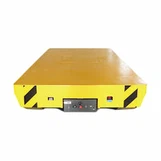
Hey there! I'm a supplier of KPJ transfer trolleys, and today I'm gonna talk about the charging methods of these awesome trolleys.
KPJ transfer trolleys are super useful in many industrial settings. They can move heavy loads around the factory floor or warehouse with ease. But how do they get the power to do all that work? Well, let's dive into the different charging methods.
Battery Charging
One of the most common charging methods for KPJ transfer trolleys is battery charging. Just like your smartphone or laptop, these trolleys have a battery that stores electrical energy. When the battery runs low, you need to charge it up.
The battery charging process is pretty straightforward. You connect the trolley to a charging station using a charging cable. The charging station provides the electrical current needed to recharge the battery. It usually takes a few hours to fully charge the battery, depending on its capacity.
Battery charging has several advantages. First of all, it's very flexible. You can charge the trolley whenever it's convenient for you, as long as you have access to a charging station. This means you can keep the trolley in operation for longer periods without having to worry about running out of power.
Another advantage is that battery-powered trolleys are relatively quiet. They don't produce the loud noise that some other types of power sources do, which is great for working environments where noise can be a problem.
However, there are also some drawbacks to battery charging. The battery has a limited lifespan, and you'll need to replace it after a certain number of charge cycles. Also, the charging time can be a bit of a hassle, especially if you need to use the trolley urgently.
Cable Drum Power
Another charging method for KPJ transfer trolleys is cable drum power. With this method, the trolley is connected to a power source through a cable that is wound around a drum. As the trolley moves, the cable unwinds or rewinds on the drum, providing a continuous supply of power.
The cable drum power system is very reliable. It ensures that the trolley always has access to power, no matter how far it travels. This makes it a great choice for applications where the trolley needs to move over long distances.
One of the main advantages of cable drum power is that it allows for continuous operation. You don't have to stop the trolley to recharge the battery, which can save a lot of time and increase productivity.
However, there are also some limitations to cable drum power. The cable has a limited length, which means the trolley's range is restricted. Also, the cable can get damaged over time, especially if it's not properly maintained.
Conductor Rail Power
Conductor rail power is another option for charging KPJ transfer trolleys. In this system, a conductor rail is installed along the path of the trolley. The trolley has a collector shoe that makes contact with the conductor rail, allowing it to draw power from the rail.
Conductor rail power is a very efficient way to supply power to the trolley. It provides a constant and stable power source, which is essential for the smooth operation of the trolley.
One of the benefits of conductor rail power is that it can support high-power applications. The trolley can handle heavier loads and move at higher speeds when powered by a conductor rail system.
However, installing a conductor rail system can be quite expensive. You need to lay the conductor rail along the entire path of the trolley, which requires a significant investment in materials and labor.
Which Charging Method is Right for You?
So, which charging method is the best for your KPJ transfer trolley? Well, it depends on your specific needs and requirements.


If you need a flexible and quiet solution, battery charging might be the way to go. It's great for applications where the trolley doesn't need to travel long distances and where you have the time to recharge the battery.
If you need continuous operation and long-range mobility, cable drum power or conductor rail power could be better options. Cable drum power is more suitable for medium-range applications, while conductor rail power is ideal for high-power and long-distance applications.
As a supplier of KPJ transfer trolleys, I can help you choose the right charging method for your needs. I have a lot of experience in this field, and I can provide you with all the information and support you need to make an informed decision.
If you're interested in our KPJ Rail Transfer Trolley or KPJ Electric Transfer Trolley, don't hesitate to get in touch. We can discuss your requirements in detail and find the perfect solution for your business.
In conclusion, the charging method of a KPJ transfer trolley is an important factor to consider when choosing a trolley for your industrial application. Each method has its own advantages and disadvantages, and you need to choose the one that best suits your needs.
I hope this blog post has been helpful to you. If you have any questions or comments, feel free to leave them below. I'd love to hear from you!
References
- Industrial Trolley Design and Operation Manual
- Electrical Power Systems for Material Handling Equipment