Hey there! As a supplier of pillar jib cranes, I often get asked about the noise level of these machines during operation. It's a crucial question, especially for those working in noise - sensitive environments like hospitals, schools, or residential areas. In this blog, I'll break down what you can expect in terms of noise when using a pillar jib crane.

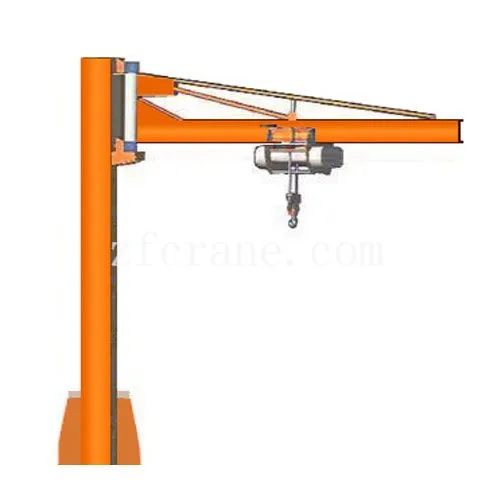
First off, let's understand what a pillar jib crane is. A pillar jib crane, like the Pillar-mounted Slewing Jib Crane, is a type of lifting equipment that's mounted on a pillar or column. It can rotate around the pillar, which gives it a wide range of motion for lifting and moving loads. They're commonly used in workshops, warehouses, and construction sites.
The noise level of a pillar jib crane during operation can vary based on several factors. One of the main factors is the type of motor it uses. Electric motors are generally quieter compared to hydraulic motors. Electric motors operate with a smooth, consistent hum. They convert electrical energy into mechanical energy with relatively little noise. On average, an electric - powered pillar jib crane might produce noise levels in the range of 60 - 70 decibels (dB) during normal operation. To put that into perspective, normal conversation usually takes place at around 60 dB. So, it's not overly loud, but you'll definitely notice it in a quiet environment.
Hydraulic motors, on the other hand, can be a bit noisier. The hydraulic system involves the movement of fluid under pressure through pipes and valves. This fluid flow can create a hissing or whining sound. A pillar jib crane with a hydraulic motor might have noise levels ranging from 70 - 80 dB. At 80 dB, it's similar to the noise level of a vacuum cleaner. This noise is mainly due to the internal components of the hydraulic system, such as the pump and the valves.
Another factor that affects the noise level is the load being lifted. When a pillar jib crane is lifting a heavy load, it has to work harder. This increased workload can cause the motor and other components to make more noise. For example, if you're using an electric pillar jib crane to lift a light load, say around 500 kg, the noise level might stay at the lower end of the 60 - 70 dB range. But if you increase the load to 2000 kg, the motor will have to exert more power, and the noise could climb up to close to 70 dB.
The age and condition of the crane also play a role. A brand - new pillar jib crane is likely to be quieter than an older one. Over time, the moving parts of the crane, such as the bearings and gears, can wear out. Worn - out parts can create additional noise as they rub against each other. For instance, a well - maintained new crane might have a noise level of 65 dB, but an older crane with some wear and tear could produce noise up to 75 dB.
The operating speed of the pillar jib crane is yet another factor. When the crane is moving at a high speed, the noise level can increase. If you set the crane to move quickly while lifting a load, the motor and the mechanical components will generate more noise compared to a slower operation. A slow - moving pillar jib crane might keep the noise level around 60 dB, but when you speed it up, it could reach 70 dB or more.
Now, you might be wondering why it matters how loud a pillar jib crane is. Well, for one, high noise levels can be a nuisance to workers. Prolonged exposure to noise above 85 dB can cause hearing damage. Even noise levels in the 70 - 80 dB range can be tiring and distracting for workers over time. This can lead to reduced productivity and an increased risk of accidents. In addition, in some workplaces, there are strict noise regulations. Companies need to ensure that the equipment they use complies with these regulations to avoid fines and legal issues.
So, what can you do to reduce the noise level of a pillar jib crane? Regular maintenance is key. By keeping the moving parts well - lubricated, you can reduce the friction between them, which in turn reduces noise. You should also check and replace worn - out parts as soon as possible. For example, if you notice that a bearing is starting to make a strange noise, replace it before it gets worse.
Another option is to use noise - reducing enclosures or insulation. You can install a sound - absorbing material around the motor or other noisy components of the pillar jib crane. This can help to dampen the noise and keep it from spreading throughout the workplace.
As a supplier, I understand that every customer has different needs when it comes to noise levels. That's why we offer a variety of pillar jib cranes with different motor types and features. Whether you need a quiet electric - powered crane for a noise - sensitive environment or a more powerful hydraulic one for heavy - duty lifting, we've got you covered.
If you're in the market for a pillar jib crane and noise is a concern for you, don't hesitate to reach out. We can help you choose the right crane that meets your requirements in terms of noise level, load capacity, and operating speed. Our team of experts can also provide advice on how to maintain your crane to keep the noise down.
In conclusion, the noise level of a pillar jib crane during operation can vary depending on the motor type, load, age, condition, and operating speed. Electric motors are generally quieter than hydraulic ones, and proper maintenance can help reduce noise. If you have any questions or are interested in purchasing a pillar jib crane, feel free to contact us. We're here to make sure you get the best crane for your needs.
References
- Crane Industry Handbook: Covers general information about crane operation and noise factors.
- Occupational Safety and Health Administration (OSHA) Guidelines: Regarding noise regulations in workplaces.