

Can a boom lift be used for bridge inspection? You bet it can! As a boom lift supplier, I've seen firsthand how these machines are game - changers in the field of bridge inspection.
Let's break down why boom lifts are such a great option for checking out bridges. First off, bridge inspection is no easy task. Bridges are massive structures, and you need to get up close and personal with every nook and cranny. That means reaching high up to the girders, down to the piers, and around all those hard - to - reach spots.
Boom lifts come in different types, each with its own set of features that make them suitable for bridge work. Take the Self Propelled Articulating Boom Lift. This bad boy has joints in its boom, which allows it to bend and maneuver around obstacles. When you're inspecting a bridge, there are often things in the way, like cables, signs, or other structural elements. The articulating boom can snake its way around these, getting you exactly where you need to be.
Imagine you're looking at a bridge with a complex support system. You can't just go straight up; you might need to approach from different angles. The articulating boom lift gives you that flexibility. You can extend the boom out, then bend it at the joints to reach under a girder or around a column. It's like having an extra - long, super - flexible arm that can do all the hard work for you.
Another type is the Self Propelled Telescopic Boom Lift. This one is all about straight - up height and reach. Telescopic boom lifts can extend to really high altitudes, making them perfect for inspecting the upper parts of a bridge. If you're dealing with a tall suspension bridge or a high - rise overpass, the telescopic boom can get you up there quickly and safely.
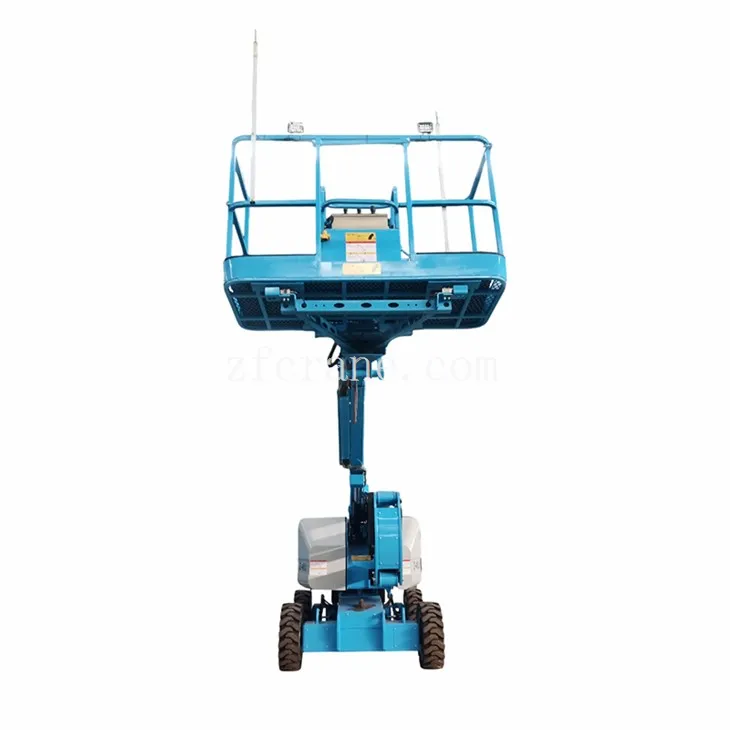

These boom lifts are self - propelled, which is a huge advantage. You don't need to rely on external equipment to move them around the bridge site. You can drive the boom lift right up to the area you want to inspect, position it, and start your work. It saves a lot of time and effort compared to other methods, like using scaffolding.
Scaffolding takes ages to set up and take down, and it's not very flexible. You're stuck with the positions you've set it up in. With a boom lift, you can move around the bridge as needed, adjusting your position on the fly.
Safety is also a major concern when it comes to bridge inspection. Boom lifts are designed with safety features to protect the operators. They have guardrails around the platform to prevent falls, and many come with stability controls to make sure the lift doesn't tip over. The controls are easy to use, so even if an operator is new to using a boom lift, they can quickly learn how to operate it safely.
When it comes to environmental friendliness, we also have the Self Propelled Electric Articulating Boom Lift. These are powered by electricity, which means they produce zero emissions at the point of use. This is great for bridge inspection in areas where air quality is a concern, like in urban centers or near sensitive ecosystems.
Electric boom lifts are also quieter than their diesel - powered counterparts. This is important when you're working on a bridge that might be near residential areas or where noise pollution needs to be minimized. You don't want to disrupt the local community while you're doing your inspection work.
In terms of efficiency, boom lifts can significantly reduce the time it takes to complete a bridge inspection. You can cover more ground in less time compared to traditional methods. This not only saves money on labor costs but also means that the bridge can be back in full use sooner.
Think about it. If a bridge has to be closed for inspection, it can cause traffic disruptions. The faster you can finish the inspection, the less impact it has on the people using the bridge. Boom lifts help you achieve that faster turnaround time.
Now, I know what you might be thinking. "Are boom lifts really that reliable for bridge inspection?" Well, I've seen these machines in action time and time again. They're built to last, with high - quality materials and components. Regular maintenance keeps them in top condition, and most manufacturers offer support and service to make sure you're always up and running.
Of course, like any piece of equipment, there are some limitations. Boom lifts have weight limits, so you need to make sure that the load on the platform, including the operator and any inspection tools, doesn't exceed the specified limit. Also, extreme weather conditions can affect their performance. High winds, for example, can make it unsafe to operate a boom lift at high altitudes.
But overall, the benefits of using boom lifts for bridge inspection far outweigh the drawbacks. They're flexible, efficient, safe, and environmentally friendly.
If you're in the business of bridge inspection or know someone who is, I highly recommend considering using boom lifts. They can revolutionize the way you approach bridge inspections. Whether you need the articulating boom for its maneuverability, the telescopic boom for its height, or the electric boom for its environmental benefits, we've got you covered.
If you're interested in learning more about our boom lifts or are thinking about making a purchase, don't hesitate to reach out. We can provide you with all the information you need, including specifications, pricing, and delivery options. Let's work together to make your bridge inspection projects more efficient and successful.
References
- General knowledge from years of experience in the boom lift industry.
- Manufacturer specifications and brochures for boom lifts.


