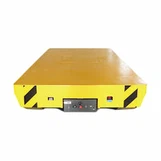
As an AGV supplier, I've witnessed firsthand the remarkable evolution of Automated Guided Vehicles and their increasing importance in modern industrial operations. One of the most critical challenges AGVs face is adapting to different floor conditions. In this blog, I'll delve into how AGVs overcome these challenges, ensuring efficient and reliable performance across diverse environments.
Understanding the Varied Floor Conditions
Industrial floors can vary significantly in terms of surface type, smoothness, slope, and cleanliness. From the highly polished floors of a semiconductor cleanroom to the rough and uneven surfaces of a construction site, each environment presents unique challenges for AGVs.
-
Smooth and Flat Floors: These are the ideal conditions for AGVs. Smooth floors, such as those found in automated warehouses or high - tech manufacturing facilities, allow AGVs to move with minimal friction and precise control. The wheels of the AGV can roll smoothly, and the navigation systems can accurately track the vehicle's position.
-
Rough and Uneven Floors: Factories with heavy machinery, outdoor yards, or construction sites often have rough and uneven floors. These surfaces can cause vibrations, which may affect the AGV's stability and the accuracy of its sensors. Potholes, cracks, and debris can also pose obstacles to the AGV's movement.
-
Sloped Floors: In some industrial settings, such as ramps in warehouses or inclined conveyor areas, AGVs need to operate on sloped floors. Moving uphill requires more power, while moving downhill requires effective braking systems to prevent the AGV from accelerating out of control.
-
Wet or Slippery Floors: Floors in food processing plants, car washes, or areas prone to spills can be wet or slippery. This reduces the traction between the AGV's wheels and the floor, increasing the risk of skidding and making it difficult to control the vehicle's movement.
Adaptation Mechanisms of AGVs
Wheel Design and Suspension Systems
- Wheel Materials: AGVs are equipped with wheels made from various materials, each suitable for different floor conditions. For smooth floors, polyurethane or rubber wheels are commonly used as they provide good traction and low noise. On rough floors, harder materials like steel or solid rubber can withstand the wear and tear better.
- Suspension Systems: To handle uneven floors, AGVs are often fitted with suspension systems. These systems allow the wheels to adjust independently to the surface, maintaining contact with the floor and ensuring stability. For example, some AGVs use a four - wheel independent suspension, which can adapt to small bumps and dips in the floor without affecting the overall movement of the vehicle.
Navigation and Control Systems
- Advanced Sensors: AGVs rely on a variety of sensors to navigate and adapt to different floor conditions. Laser scanners can detect obstacles and changes in the floor surface, allowing the AGV to adjust its path accordingly. Inertial measurement units (IMUs) can measure the vehicle's acceleration and orientation, helping to maintain stability on sloped or uneven floors.
- Adaptive Control Algorithms: The control systems of AGVs are programmed with adaptive algorithms. These algorithms can adjust the speed, acceleration, and steering of the AGV based on the feedback from the sensors. For instance, when the AGV detects a rough patch on the floor, the control system can reduce the speed to minimize vibrations and ensure a smooth ride.
Power Management
- Variable Power Output: On sloped floors, AGVs need to adjust their power output. When moving uphill, the AGV's motor can increase its power to overcome the gravitational force. Conversely, when moving downhill, the power can be reduced, and the braking system can be engaged to control the speed. Some AGVs are also equipped with regenerative braking systems, which can convert the kinetic energy generated during braking into electrical energy and store it in the battery.
Surface Cleaning and Maintenance
- On - board Cleaning Devices: In environments where floors are prone to debris, some AGVs can be equipped with on - board cleaning devices. These devices can sweep or vacuum the floor as the AGV moves, ensuring a clean path for subsequent operations. This not only helps the AGV to move smoothly but also improves the overall cleanliness of the workspace.
Case Studies
Warehouse with Mixed Floor Conditions
A large e - commerce warehouse has a combination of smooth concrete floors in the storage areas and slightly rough epoxy - coated floors in the loading and unloading zones. Our Automated Guided Vehicle fleet in this warehouse uses a combination of laser navigation and IMU sensors. The laser scanners detect any changes in the floor surface, while the IMU sensors help to maintain the vehicle's balance. The wheels are made of a high - quality rubber compound that provides good traction on both types of floors. The AGVs can adjust their speed and steering based on the floor conditions, ensuring efficient and reliable operation throughout the warehouse.
Heavy - Duty Manufacturing Plant
In a heavy - duty manufacturing plant, the floors are often rough and uneven due to the movement of heavy machinery. Our Heavy Load Laser Guided Vehicle is designed to handle these conditions. It is equipped with a robust suspension system and large, solid rubber wheels. The AGV's control system uses advanced algorithms to adjust the power output and steering based on the feedback from the sensors. This allows the AGV to transport heavy loads safely and efficiently across the plant floor.
Conclusion
Adapting to different floor conditions is a crucial aspect of AGV design and operation. Through innovative wheel design, advanced navigation and control systems, effective power management, and surface cleaning mechanisms, AGVs can overcome the challenges posed by diverse floor environments. As an AGV supplier, we are committed to continuously improving our products to meet the evolving needs of our customers.


If you're looking for reliable AGV solutions that can adapt to your specific floor conditions, we'd love to have a conversation with you. Whether you're in the warehousing, manufacturing, or logistics industry, our team of experts can provide you with customized AGV solutions. Contact us today to start the procurement discussion and take your industrial operations to the next level.
References
- Groover, M. P. (2015). Automation, Production Systems, and Computer - Integrated Manufacturing. Pearson.
- Wang, J., & Zhang, S. (2018). Research on the Adaptive Control Strategy of Automated Guided Vehicles in Complex Environments. Journal of Advanced Transportation, 2018.