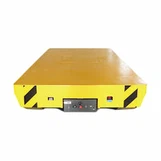
As a supplier of KPD transfer carts, I understand the importance of ensuring that operators are well - trained to use these carts safely and efficiently. In this blog, I'll share some practical steps and tips on how to train operators to use the KPD transfer cart.
Pre - training Preparation
Before starting the actual training, it's crucial to conduct a thorough pre - training assessment. First, we need to evaluate the operators' prior knowledge and experience. Some operators may have worked with similar equipment, while others may be completely new to the field. This assessment can be done through a simple questionnaire or an in - person interview.

We should also provide operators with detailed information about the KPD transfer cart. This includes the cart's specifications, features, and its intended use. For example, the KPD Rail Transfer Cart has unique design elements that are different from other types of transfer carts. Operators need to know the maximum load capacity, the operating speed range, and the power source requirements.

A safety briefing is another essential part of the pre - training preparation. Safety should always be the top priority. We need to explain the potential hazards associated with operating the transfer cart, such as collision risks, electrical hazards, and mechanical failures. Provide operators with personal protective equipment (PPE) like safety helmets, safety shoes, and high - visibility vests, and ensure they know how to use them correctly.
Theoretical Training
Theoretical training forms the foundation of the operator's knowledge about the KPD transfer cart. Start with an overview of the cart's working principles. Explain how the power system, whether it's a battery - powered system or a low - voltage rail - powered system like the Rail Transfer Cart, functions. Operators should understand how the power is transferred to the wheels to move the cart forward or backward.
Teach the operators about the control panel of the transfer cart. Show them the different buttons, switches, and indicators. Explain what each one does, for example, the emergency stop button, the speed control knob, and the direction - changing switch. Provide them with a user manual that they can refer to during the training and in their future work.

It's also important to cover maintenance and troubleshooting during the theoretical training. Teach operators about basic maintenance tasks such as checking the tire pressure, lubricating the moving parts, and inspecting the electrical connections. Provide them with a list of common problems that may occur and the corresponding solutions. For instance, if the cart suddenly stops moving, they should know how to check the power supply and the control system.
Practical Training
After the theoretical training, it's time for practical training. Start with a demonstration by an experienced trainer. The trainer should operate the KPD transfer cart in a safe and controlled environment, showing the operators how to start, stop, turn, and load/unload the cart. During the demonstration, explain each step clearly and emphasize the safety procedures.
Next, let the operators practice under the supervision of the trainer. Start with simple tasks, such as moving the cart in a straight line and making basic turns. As they gain more confidence and proficiency, gradually introduce more complex tasks, such as operating the cart in a confined space or with a full load.
Provide feedback to the operators during their practice sessions. Point out their mistakes and give them suggestions on how to improve. Encourage them to ask questions and learn from their experiences. Practical training should be repeated until the operators can operate the transfer cart safely and independently.
Scenario - based Training
Scenario - based training is an effective way to prepare operators for real - world situations. Create different scenarios that the operators may encounter during their work, such as a sudden obstacle on the track, a power failure, or a malfunction of the control system.
In each scenario, guide the operators on how to respond appropriately. For example, if there is an obstacle on the track, they should immediately press the emergency stop button and then assess the situation to determine the best way to remove the obstacle. Scenario - based training helps operators develop critical thinking and problem - solving skills, which are essential for safe and efficient operation of the KPD transfer cart.
Continuous Training and Evaluation
Training is not a one - time event. It should be an ongoing process. Regularly organize refresher courses to reinforce the operators' knowledge and skills. These courses can cover new features or improvements of the KPD transfer cart, as well as updates on safety regulations.
Conduct regular evaluations of the operators' performance. This can be done through practical tests, written exams, or on - the - job observations. Based on the evaluation results, provide individualized training and support to the operators who need improvement.
Encouraging Contact for Purchase and Negotiation
If you are interested in our KPD transfer carts or need more information about our training programs, we welcome you to contact us. Our team of experts is ready to assist you with all your inquiries, whether it's about product specifications, pricing, or custom - made solutions. Training your operators to use our KPD transfer carts effectively will not only improve your operational efficiency but also enhance safety in your workplace. So, don't hesitate to reach out and start the conversation about how our products can meet your business needs.
References
- Industry standards and guidelines for industrial transfer cart operation.
- Manufacturer's user manual for KPD transfer carts.
- Previous training materials and experiences within the industry.