Hey there! As a supplier of moveable jib cranes, I often get asked about the floor load requirement for these nifty pieces of equipment. So, let's dive right in and break it down.
First off, what exactly is a floor load requirement? Well, it's basically the amount of weight per square foot that a floor can safely support. When it comes to a moveable jib crane, we need to consider not just the weight of the crane itself but also the maximum load it'll be lifting and any dynamic forces that might come into play during operation.


The weight of a moveable jib crane can vary quite a bit depending on its size, design, and the materials used. Smaller, more lightweight models might weigh a few hundred pounds, while larger, heavy - duty ones can tip the scales at several thousand pounds. And then, we have to factor in the load it's designed to lift. Moveable jib cranes can have lifting capacities ranging from a few hundred kilograms to several tons.
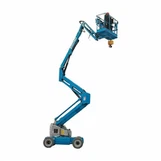
Let's say we've got a Moveable Articulating Jib Crane. These types of cranes are great because they offer a lot of flexibility in terms of movement and can reach into tight spaces. But they still need a solid foundation to operate safely.
To figure out the floor load requirement, we start by looking at the static load. This is the combined weight of the crane and the maximum load it can carry. For example, if our moveable jib crane weighs 1000 pounds and has a lifting capacity of 2000 pounds, the static load is 3000 pounds. But we can't just divide this by the area of the crane's base and call it a day.
Dynamic forces also come into play. When the crane is in motion, especially when it's starting and stopping, there are additional forces that act on the floor. These dynamic forces can be significant, sometimes adding up to 20 - 30% of the static load. So, if our static load is 3000 pounds, we might need to account for an extra 600 - 900 pounds due to dynamic forces.
The type of floor also matters a great deal. A concrete floor is generally the best option for a moveable jib crane. Concrete floors can usually handle higher loads compared to other types of floors like wooden or tiled floors. But even concrete floors have their limits. The thickness and quality of the concrete play a big role. A thicker, well - reinforced concrete floor can support more weight than a thin, poorly constructed one.
If you have a wooden floor, you'll need to be extra careful. Wooden floors are more flexible and might not be able to handle the concentrated loads that a moveable jib crane can exert. In some cases, you might need to reinforce the wooden floor or use a crane with a lower lifting capacity.
Another factor to consider is the distribution of the load. The base of the moveable jib crane should be designed in a way that spreads the load evenly across the floor. A larger base area will distribute the load more effectively, reducing the pressure on any one point of the floor.
Let's talk about some real - world scenarios. Suppose you're setting up a moveable jib crane in a small workshop. The floor is a concrete slab that's 4 inches thick. You've got a crane with a 1500 - pound weight and a 1000 - pound lifting capacity. After accounting for dynamic forces, you calculate that the total load on the floor could be around 3000 pounds. You need to make sure that the 4 - inch concrete slab can handle this load. If it can't, you might need to consult a structural engineer to see if the floor can be reinforced or if you need to choose a different location.
On the other hand, if you're in a large industrial facility with a thick, well - reinforced concrete floor, you might be able to use a larger, more heavy - duty moveable jib crane. These facilities are often designed to handle heavy equipment, so the floor load requirements are usually less of a concern.
It's also important to note that local building codes and regulations can have an impact on the floor load requirement. Some areas have strict rules about the amount of weight that a floor can support, especially in commercial and industrial settings. You'll need to make sure that your moveable jib crane installation complies with these regulations.
So, how do you determine if your floor can handle a moveable jib crane? The best way is to consult a professional. A structural engineer can assess your floor and give you an accurate estimate of its load - bearing capacity. They'll take into account all the factors we've discussed, such as the type of floor, the static and dynamic loads, and the distribution of the load.
As a moveable jib crane supplier, I always recommend that customers get a professional floor assessment before purchasing a crane. This way, you can be sure that you're choosing the right crane for your space and that it'll operate safely.
If you're in the market for a moveable jib crane and have questions about floor load requirements or any other aspect of our products, don't hesitate to reach out. We're here to help you make the best decision for your business. Whether you need a small, lightweight crane for a home workshop or a large, heavy - duty one for an industrial facility, we've got you covered.
Contact us today to start the conversation about your moveable jib crane needs. We can provide you with detailed information about our products, help you calculate the floor load requirements for your specific situation, and guide you through the entire purchasing process.
References
- Crane Manufacturer's Handbook: This handbook provides detailed information about the design and operation of cranes, including load calculations.
- Building Code Requirements for Structural Concrete: This code outlines the standards for concrete floors and their load - bearing capacities.
- Engineering Textbooks on Structural Analysis: These textbooks offer in - depth knowledge about how loads are distributed and how to calculate the strength of different types of floors.