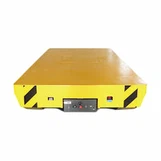
What is the material of the kpd transfer cart's body?
As a supplier of KPD transfer carts, I often get asked about the materials used in the construction of these carts. The choice of materials is crucial as it directly impacts the performance, durability, and functionality of the transfer cart. In this blog post, I'll delve into the materials commonly used for the body of KPD transfer carts and explain why they are selected.
Steel - The Foundation of KPD Transfer Carts
Steel is the most prevalent material for the body of KPD transfer carts. There are several reasons for this widespread use.
First and foremost, steel offers exceptional strength. KPD transfer carts are designed to carry heavy loads, and steel can withstand the high stresses and strains associated with transporting large - scale items. Whether it's in a factory environment where it needs to move machinery parts or in a warehouse for handling bulk goods, the strength of steel ensures that the cart can handle the weight without deformation.
For example, in a manufacturing plant where large metal components are being moved from one production stage to another, a KPD transfer cart made of steel can easily support the weight of these components. The high - strength steel frame provides a stable base for the load, preventing any wobbling or tipping during transportation.
Secondly, steel is highly durable. It can resist wear and tear over a long period of time, even in harsh industrial environments. These environments may expose the cart to factors such as abrasion from rough floors, impacts from other equipment, and exposure to chemicals or moisture. Steel can withstand these conditions, ensuring that the cart has a long service life.
In addition, steel is relatively easy to fabricate. It can be cut, welded, and shaped into various forms to meet the specific design requirements of the KPD transfer cart. This flexibility allows for customization, such as creating carts with different sizes, shapes, and load - bearing capacities. For instance, if a customer needs a cart with a specific deck size or a unique frame structure to fit into their existing production line, steel can be fabricated accordingly.
Aluminum - A Lightweight Alternative
While steel is the dominant material, aluminum is also used in some cases, especially when weight reduction is a priority. Aluminum is much lighter than steel, which can offer several advantages.
One of the main benefits is energy efficiency. A lighter cart requires less power to move, which can result in lower energy consumption. This is particularly important for electric - powered KPD transfer carts. For example, in a facility where the cart needs to operate continuously throughout the day, using an aluminum - bodied cart can lead to significant energy savings over time.
Aluminum also has excellent corrosion resistance. In environments where the cart may be exposed to moisture or chemicals, such as in a food processing plant or a chemical factory, aluminum can prevent rust and corrosion. This helps to maintain the appearance and functionality of the cart.
However, aluminum has a lower strength - to - weight ratio compared to steel. So, for very heavy - duty applications, it may not be the best choice. But for lighter loads and applications where corrosion resistance and energy efficiency are more important, aluminum - bodied KPD transfer carts can be a great option.
Composite Materials - The Future of Cart Bodies
In recent years, composite materials have started to gain attention in the construction of KPD transfer cart bodies. Composite materials are made by combining two or more different materials to create a material with enhanced properties.
One of the key advantages of composite materials is their high strength - to - weight ratio. They can be as strong as steel but much lighter, similar to aluminum. This allows for the design of carts that are both lightweight and capable of carrying heavy loads.
Composite materials also offer excellent resistance to corrosion and chemicals. They can be customized to have specific properties, such as high impact resistance or low thermal conductivity. For example, in a high - tech manufacturing facility where sensitive electronic components are being transported, a composite - bodied cart can provide a stable and protective environment.
However, the use of composite materials is still relatively limited due to their higher cost and more complex manufacturing processes. As technology advances and costs decrease, we may see more widespread use of composite materials in KPD transfer carts.
Other Materials and Components
In addition to the main body materials, there are other components of the KPD transfer cart that use different materials. For example, the wheels are often made of materials such as polyurethane or cast iron. Polyurethane wheels offer a smooth ride, low noise, and good traction, while cast iron wheels are more suitable for heavy - duty applications and can withstand high loads.
The electrical components, such as the motors and control systems, are also crucial parts of the cart. These components are typically made of materials that ensure reliable electrical performance and safety.
Conclusion
The choice of material for the body of a KPD transfer cart depends on various factors, including the intended application, load capacity, environment, and budget. Steel remains the most commonly used material due to its strength and durability, but aluminum and composite materials are emerging as viable alternatives in certain situations.


If you are in the market for a KPD transfer cart, it's important to consider the material of the body carefully. Our company offers a wide range of KPD Rail Transfer Cart options, each designed with the right materials to meet your specific needs. Whether you need a heavy - duty steel cart for a large - scale industrial operation or a lightweight aluminum cart for energy - efficient transportation, we can provide the solution.
If you have any questions or would like to discuss your requirements further, please don't hesitate to contact us. We are here to assist you in finding the perfect Rail Transfer Cart for your business.
References
- Industrial Materials Handbook: A Guide to Selection and Application, John Wiley & Sons
- Handbook of Composite Materials, Springer