

Hey there! As a supplier of pillar jib cranes, I often get asked about the remote control function of these nifty machines. So, I thought I'd take a few minutes to break it down for you.
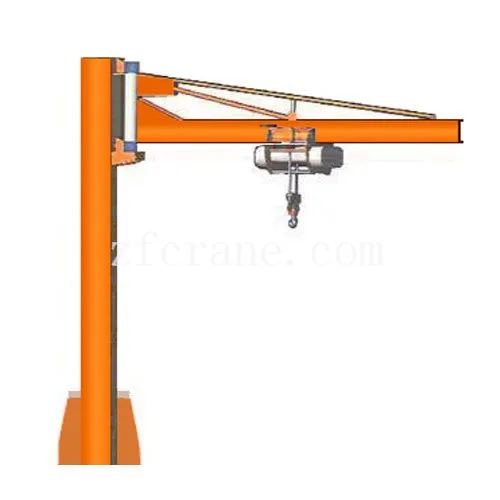
First off, let's talk about what a pillar jib crane is. It's a type of crane that's mounted on a pillar or column, and it can rotate 360 degrees. This makes it super versatile and perfect for moving heavy loads in a relatively small area. You can find these cranes in all sorts of industrial settings, like warehouses, factories, and workshops.
Now, onto the remote control function. The remote control is a game-changer when it comes to operating a pillar jib crane. It gives the operator a lot more flexibility and control over the crane's movements. Instead of being stuck right next to the crane, the operator can stand at a safe distance and still manage all the operations.
One of the biggest advantages of the remote control is safety. When you're using a traditional control panel, you have to be close to the crane, which can be dangerous if there are moving parts or heavy loads. With a remote control, you can stay out of harm's way. You can watch the load from a better vantage point and make sure everything is going smoothly. For example, if there's a risk of the load hitting something, you can quickly stop the crane's movement without having to rush over to the control panel.
Another great thing about the remote control is convenience. You can move around the work area while operating the crane. This means you can position yourself in the best spot to see what's going on. Maybe you need to guide the load through a narrow passage or into a specific location. With the remote control in your hand, you can walk alongside the load and make precise adjustments as needed.
The remote control also allows for more precise movements. Most modern remote controls for pillar jib cranes have buttons or joysticks that let you control the speed and direction of the crane's rotation, lifting, and lowering. You can make small, incremental changes to get the load exactly where you want it. This is especially important when you're dealing with delicate or expensive items.
Now, let's take a closer look at how the remote control works. It uses radio frequency (RF) technology to communicate with the crane's control system. The remote control sends signals to a receiver on the crane, which then interprets those signals and tells the crane what to do. This technology is very reliable and has a good range, so you can operate the crane from a decent distance away.
When it comes to features, the remote controls for pillar jib cranes can vary. Some have basic functions like up, down, left, and right controls. Others are more advanced and come with additional features. For example, some remote controls have a "panic stop" button. If something goes wrong, you can press this button, and the crane will immediately stop all its movements. There are also remote controls that can store different operating settings. So, if you often lift loads of a certain weight or move them to a specific location, you can save those settings and quickly recall them later.
If you're in the market for a pillar jib crane, you might be interested in our Pillar-mounted Slewing Jib Crane. It's a top-of-the-line model that comes with a high-quality remote control. The remote control is easy to use and has all the features you need to operate the crane safely and efficiently.

In conclusion, the remote control function of a pillar jib crane is a must-have feature. It offers safety, convenience, and precision, making your work a whole lot easier. If you're thinking about buying a pillar jib crane, make sure to consider the quality of the remote control. And if you have any questions or want to discuss your specific needs, don't hesitate to reach out to us. We're here to help you find the perfect crane for your business.
References
- Crane Industry Handbook: Covers general information about different types of cranes and their features.
- Industrial Equipment Magazines: Articles on the latest advancements in crane technology, including remote control systems.


