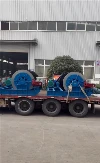
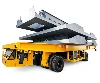
The hydraulic oil is formed into a certain pressure by the vane pump, and enters the lower end of the hydraulic cylinder through the oil filter, explosion-proof electromagnetic reversing valve, throttle valve, hydraulic control check valve, and balance valve, so that the piston of the hydraulic cylinder moves upward to lift the heavy object. The return oil at the upper end of the hydraulic cylinder returns to the oil tank through the explosion-proof electromagnetic reversing valve. Its rated pressure is adjusted by the overflow valve, and the pressure gauge reading is observed through the pressure gauge.
The piston of the hydraulic cylinder moves downward (that is, the heavy object descends). The hydraulic oil enters the upper end of the hydraulic cylinder through the explosion-proof electromagnetic reversing valve, and the return oil at the lower end of the hydraulic cylinder returns to the oil tank through the balance valve, hydraulic control check valve, throttle valve, and explosion-proof electromagnetic reversing valve. In order to make the heavy object descend smoothly and the braking safe and reliable, a balance valve is set on the return oil line to balance the circuit and maintain the pressure so that the descending speed is not changed by the heavy object. The throttle valve adjusts the flow and controls the lifting speed. In order to make the braking safe and reliable and prevent accidents, a hydraulic control check valve, that is, a hydraulic lock, is added to ensure that it can be safely self-locked when the hydraulic pipeline bursts accidentally. An overload acoustic alarm is installed to distinguish overload or equipment failure.
Working Principle Of Lifting Platform
Nov 10, 2024


Send Inquiry
Latest News